NFTs & DAOs: The Weird, the Wild, and the Wonderfully Decentralised
NFTs – Non-Fungible What Now?
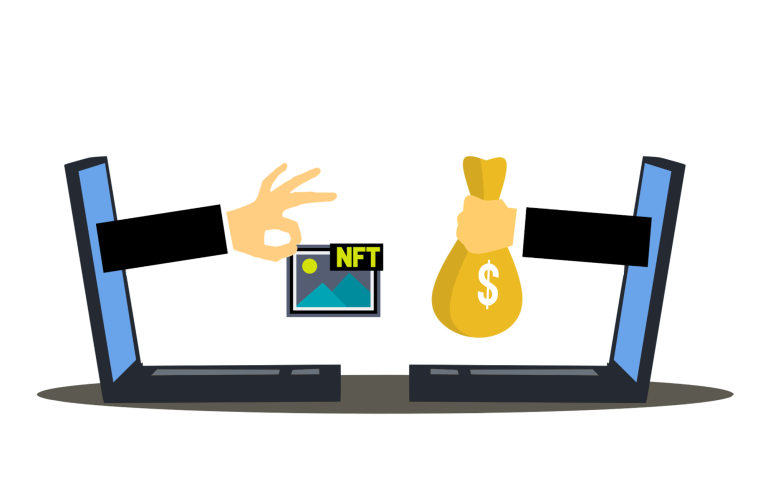
NFTs, or Non-Fungible Tokens, are unique digital assets that represent ownership or proof of authenticity of a specific item, often art, music, videos, collectibles, or in-game items, on the blockchain. The term non-fungible means they are not interchangeable. One NFT is not equal to another, unlike cryptocurrencies such as Bitcoin or Ethereum, which are fungible and interchangeable.
NFTs use blockchain technology, typically Ethereum, to mint, store, and transfer these digital assets. Once something is minted as an NFT, its record of ownership is secured on-chain, meaning it can’t be tampered with or duplicated.
Key Features of NFTs:
- Uniqueness: Each NFT has a unique metadata and token ID.
- Provenance: You can trace the full history of ownership.
- Interoperability: NFTs can be used across platforms (e.g., games or virtual worlds).
- Programmability: Smart contracts can enforce rules like royalties to creators.
Examples of NFTs:
- Digital Art (e.g. Beeple’s $69M auction)
- Gaming (e.g. Axie Infinity, skins, characters)
- Music & Media Rights
- Virtual Land
- Domain Names
- Real Estate & Tokenized Assets
- Tickets and Identity (Access passes, proof of attendance)
NFTs have opened the door for creators and collectors to thrive in a decentralized economy, giving artists more control over their work and royalties.
It’s like owning a signed vinyl record, but instead, it lives in your digital wallet.
DAOs – The Internet’s Group Chat With a Treasury
A DAO is a blockchain-based organization governed by smart contracts and run by a community of token holders, rather than a centralized authority. Decisions, like how to allocate funds or update policies, are made through proposals and votes, giving every member a say.
DAOs are transparent (all votes and treasury activity are visible on-chain), autonomous (rules are enforced automatically), and community-owned.
How DAOs Work:
- Members hold governance tokens, often earned or bought.
- These tokens allow them to vote on proposals.
- Funds are stored in a smart contract, not a bank.
- Everything from rules to funding decisions is executed on-chain.
DAO = Decentralised Autonomous Organisation
It’s like a democratic online club where rules are enforced by smart contracts, not people with clipboards.
No CEO. No manager. Just the group calling the shots.
What DAOs Do:
- Protocol governance (e.g., Uniswap DAO)
- Investment funds (e.g., The LAO, MetaCartel)
- Social communities (e.g., Friends With Benefits)
- Media collectives (e.g., Bankless DAO)
- Grants and ecosystem funding (e.g., Gitcoin)
- Fund charities or projects
- Decide the future of DeFi protocols
- Govern games and metaverse worlds
- Manage NFT communities
DAOs are the organizational layer of Web3—a way to coordinate people, ideas, and money without needing a CEO or boardroom.
Where NFTs & DAOs Meet
NFTs and DAOs complement each other beautifully in the Web3 space. Here's how:
- NFTs as Membership Passes: Some DAOs use NFTs as governance passes or proof of membership. Holding a specific NFT grants you access to vote, attend meetings, or unlock content.
- Creator DAOs: Artists or musicians might launch an NFT collection and then form a DAO where holders help guide the project's future or collaborate on future drops.
- Fractionalized NFTs: Expensive NFTs can be fractionalized, and those pieces can be governed via a DAO, letting a group of people collectively own and manage it.
- Treasuries Funded by NFT Sales: Many NFT projects fund their DAOs using proceeds from initial sales or royalties. These funds are then controlled by the community.
Together, NFTs give uniqueness and value to digital items, and DAOs create shared governance and coordination around them.
Why It All Matters:
NFTs and DAOs are two of the most transformative elements of Web3. They redefine ownership, governance, identity, and community on the internet.
- Empowerment: Artists, developers, and users have unprecedented power to create and govern their own ecosystems.
- Fair Economics: Creators can embed royalties into NFTs, and DAOs can distribute value in a transparent way.
- Censorship Resistance: Because they're decentralized, these systems are harder to shut down or censor.
- Innovation Explosion: Communities can experiment quickly with funding, ideas, and projects without red tape.
This isn’t just about digital art or new clubs. It’s about reshaping how value and decisions flow across the internet.
This is web3 in action: creators own their work, fans have a voice, and random people on the internet build stuff together.
NFTs and DAOs are the building blocks of a decentralized, user-owned internet. While still early and evolving, they’ve already begun to change how we define value, ownership, and participation.
What once started as experiments in art and governance are now the foundations of a new era, where creativity meets technology, and the crowd becomes the boardroom.
Those who explore now are laying the groundwork for what comes next.